Live now
01
Tactile fret markers
3D-printed domes and ridges that let visually impaired players find position by touch. Designed, printed, and playable today.
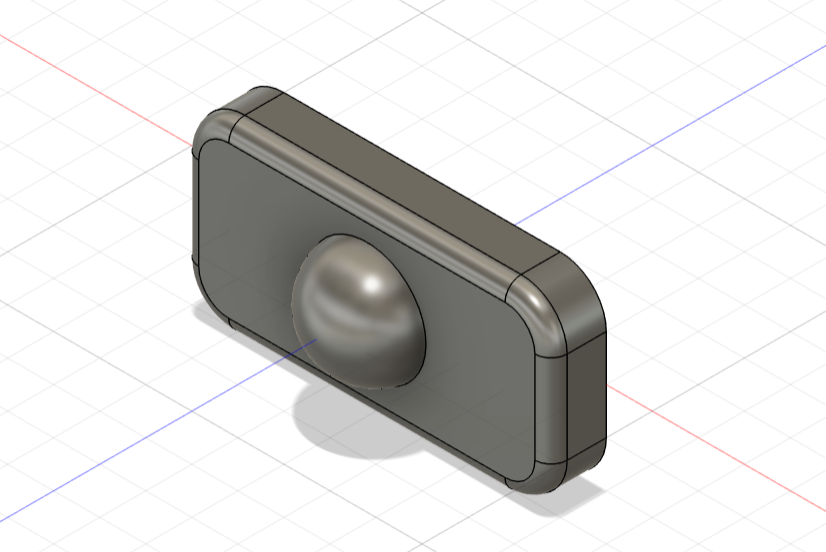
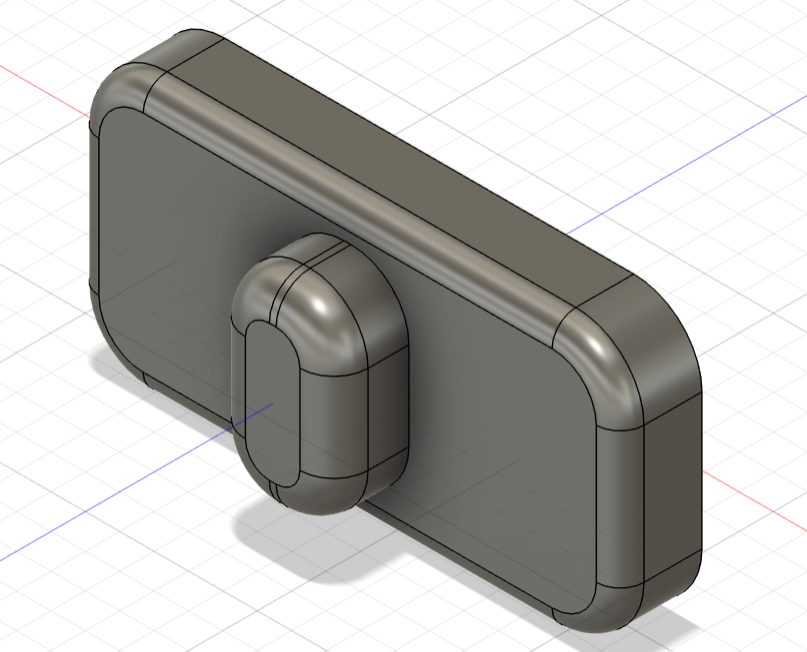
Explore the design ↑Rock for Vision is more than fundraising and performing. It's also about building. I design 3D-printed tactile fret markers so visually impaired musicians can find their place on the neck by touch, and never lose the flow of the music.
Almost every guitar has small dots along the side of the neck at the 3rd, 5th, 7th, 9th, and 12th frets. Sighted players glance at them without thinking. But for a visually impaired musician, those dots do nothing.
Instead, they have to count frets from the nut every single time they change position. It's a slow, deliberate action that breaks the flow of the music right when it matters most.
My tactile fret markers replace those invisible dots with raised bumps and ridges on the flat edge of the fretboard, right where a player's thumb naturally rests.
As the thumb glides up the neck, each marker's shape tells you instantly where you are: one dome, two domes, three domes, a ridge. No counting, no pause, no broken flow.
Drag to rotate · scroll to zoom · or jump to any marker to see how its shape encodes the fret.
Bump relief is shown enlarged so it reads on screen. The real markers protrude just 1.1 mm. Toggle to true scale above.
Each marker's shape is unique so it can be told apart by touch alone. There's also a hidden second cue: the base grows longer with each added bump, so even a glancing brush tells you roughly where your hand is.
The octave, fret 12, gets the double mark, echoing the double dots factory guitars already use there. Familiar logic, made tactile.
Visually impaired players often learn on school or borrowed guitars. Because the markers use removable adhesive and never touch the curved back of the neck, resting only on the flat fretboard edge where side dots already live, they add accessibility without leaving a trace.
Every marker is modeled to exact tolerances, then 3D printed and tested by touch on a real fretboard edge.
Rock for Vision's innovation work is just getting started. Each prototype builds on the last, tested with real players and refined over time. Here's what's in the workshop.
3D-printed domes and ridges that let visually impaired players find position by touch. Designed, printed, and playable today.
Explore the design ↑The next tactile tool is being designed and tested right now. Details, renders, and an interactive model will land here as it comes together.
Coming soonThis project grows with its community. If you're a player, teacher, or maker with an accessibility idea for musicians, I'd love to hear it.
Get in touch →Rock for Vision pairs live performance with hands-on innovation, raising funds for glaucoma research while building tools that put music back within reach. Your support fuels both.